Pest management is not one-size-fits-all. Whether you need periodic fumigation or a routine pest control programme depends on the scale of the problem, the environment involved, and the standards your industry demands.
What each approach is designed for
Pest control — prevention and ongoing protection
Routine pest control is preventive. It uses inspection-led treatments, baiting, monitoring, and exclusion to keep rodents, insects, and birds from establishing themselves. It is the right foundation for most facilities — offices, hospitals, hospitality, retail, and food environments.
Fumigation — decisive treatment for established infestations
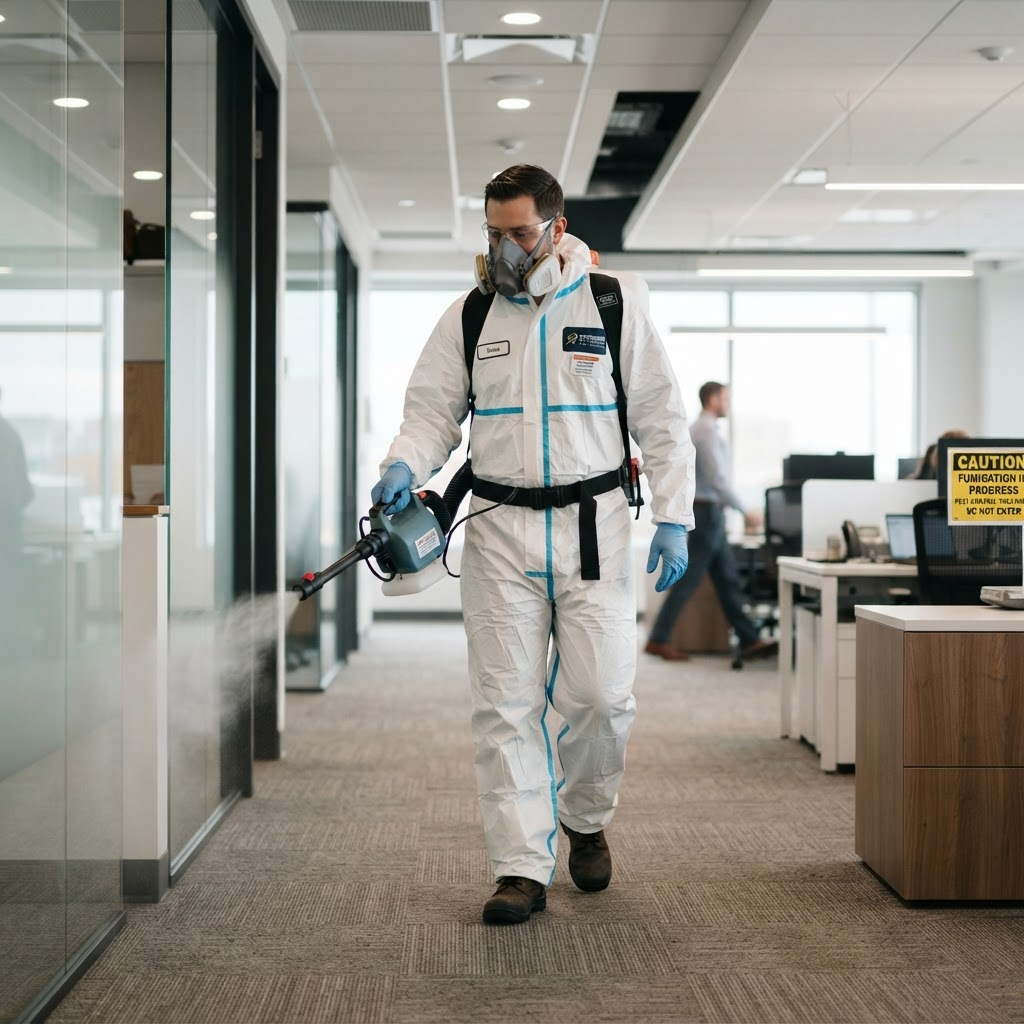
Fumigation is a specialized, containment-based treatment used when an infestation is established or widespread — for example in warehouses, stored goods, or premises with inaccessible harborages. It uses approved fumigants under controlled sealing, which is why it demands licensed, certified technicians and strict safety protocols.
- Choose routine pest control for ongoing protection and early detection.
- Choose fumigation for stored goods, warehouses, and established infestations.
- Choose both where regulated standards (such as healthcare or food handling) require documented pest management.
Safety first, in every scenario
Both approaches must be delivered with safety as the priority. That means licensed applicators, approved products, clear communication with occupants, and documentation of every treatment — for your records and for auditors.
The most cost-effective pest strategy is never the reaction after an infestation — it is the inspection and prevention plan that catches the problem early.
Let an assessment guide the choice
The right answer for your facility comes from a site assessment, not a guess. A qualified team can inspect your premises, identify risk areas, and recommend the programme — or combination — that fits.
Related service
Interested in Fumigation & Pest Control? We can help.